Enchanting Lake House Nature Forest Backgrounds
In the fast-paced world of digital marketing and content creation, finding design assets that evoke genuine emotion is rare. We often struggle to find visuals that balance professionalism with a personal, artisanal touch. This is where Lake House Nature Forest Backgrounds enters the conversation. It is not merely a collection of images; it is a curated bundle of 20 captivating book covers designed to serve as a sanctuary for creativity. For designers, publishers, and hobbyists alike, this collection offers a distinct aesthetic that blends the tranquility of nature with the demands of modern graphic design.
Understanding the Visual Character
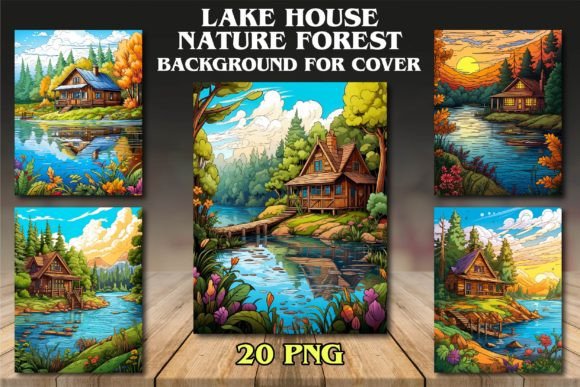
The personality of this collection is rooted in organic authenticity. When we talk about the visual characteristics of Lake House Nature Forest Backgrounds, we are looking at a harmonious blend of intricate patterns and calming landscapes. The style leans heavily into a handcrafted aesthetic. It avoids the sharp, cold lines of modern minimalism in favor of softer, more inviting textures. The imagery spans from the peaceful shores of a lake to the whispering depths of a forest, offering a diverse range of themes. This isn't just about greenery; it's about the specific mood of mindfulness. The designs are "meticulously crafted," implying a level of detail that resonates with audiences looking for depth and meaning in visual content.
For the creative professional, understanding this personality is key to application. The visual weight of these backgrounds is substantial but not overpowering. They possess a rich color palette—think earthy tones, deep greens, and serene blues—that provides a strong foundation for overlaying text or other design elements. Because the files are provided in PNG format at 300 dpi, they retain a high level of fidelity. This is crucial for print applications where pixelation can ruin the illusion of reality. The "premium font" equivalent in the world of graphics, these backgrounds offer a level of quality that elevates a project from amateur to polished.
Strategic Applications for Modern Creators
As designers and strategists, we must ask: where does this asset fit into a workflow? The versatility of Lake House Nature Forest Backgrounds makes it a valuable component across multiple verticals. For editorial design and packaging design, these covers can serve as the primary visual hook. Imagine a wellness brand or a self-help book; the imagery immediately sets the tone of relaxation and healing. It acts as a visual shorthand for the content inside, helping to establish a strong brand identity that prioritizes calm and nature.
In the realm of web design and social media graphics, these assets shine as hero images or thematic backdrops. For bloggers and content creators focusing on lifestyle, travel, or mindfulness, using these backgrounds can instantly break up the monotony of stock photography. They offer a unique "creative font" style of visual language that feels personal rather than corporate. Entrepreneurs can utilize them for marketing materials that need to feel approachable and grounded. For instance, a small business owner selling handmade goods could use a forest background to frame their product photos, creating a cohesive narrative around the natural origins of their items.
Furthermore, the collection caters to the "adult coloring" niche, which is a significant market for stress relief and hobbyists. However, the utility extends beyond coloring. These images can be repurposed for desktop wallpapers, digital planners, or even mood boards for interior design projects. The goal is to leverage the inherent tranquility of the designs to influence the viewer's state of mind, making them more receptive to the message being conveyed.
Optimizing Design Assets for Impact
Integrating a strong visual element like Lake House Nature Forest Backgrounds requires a thoughtful approach to typography and layout. Because the backgrounds are detailed and rich, your choice of typeface is critical. To maintain readability, you need to ensure sufficient contrast. If the background is a dense forest scene, a light-colored, bold sans serif font often works best to cut through the visual noise. Conversely, if the background features a calm lake with open space, you might experiment with an elegant serif font or a flowing script font to complement the organic lines of the water.
When evaluating project fit, consider the visual hierarchy. The background should support the message, not compete with it. You may need to apply a subtle overlay or a gradient to the PNG image to ensure your text remains the focal point. This is a standard practice in modern typography and layout design. Testing different font pairings is essential here. Try pairing a clean, geometric sans serif for headers with a softer, handwritten font for accents to echo the artisanal quality of the forest imagery.
From a technical standpoint, always check the licensing for commercial use. Since this is a bundle of book covers and design assets, it is likely intended for broad application, but verifying the terms ensures you can use them in client work or merchandise without legal friction. Finally, don't be afraid to crop and manipulate. While the files are presented as "book covers," a creative director might zoom into a specific section of a design to create a texture for a business card or a header for a newsletter. By treating these assets as raw material rather than finished products, you unlock their full potential to build a cohesive, nature-inspired brand identity that stands out in a crowded digital landscape.